
When Website Performance Issues Impact Business Outcomes
Website Design & Development for Scalable, High-Performing Business Websites
Most businesses recognize when their website is underperforming - declining conversion rates, high bounce rates, or leads that fail to progress. The underlying causes, however, are often architectural rather than cosmetic. A business website is more than a digital presence - it is a functional system that influences how customers evaluate, trust, and engage with your organisation. When it underperforms, the consequences show up in missed conversions, poor user retention, and compounding technical debt that slows down future growth.
 NDA ProtectedClient-Owned IPEnterprise ArchitectureNDA ProtectedClient-Owned IPEnterprise ArchitectureNDA ProtectedClient-Owned IPEnterprise Architecture

Created for business owners, marketing leaders, and digital teams who view their website as a growth asset-not just an online presence.

Challenges Businesses Face with Website Design & Development
The gap between what a website should accomplish and what it actually delivers often results from decisions made during the build - decisions about structure, performance priorities, and user flow that did not account for how real users would interact with the site.
Slow Load Times
A delay of even a few seconds reduces engagement before content is fully experienced, creating measurable impact on conversion. Load speed is not a technical nicety - it is directly correlated with whether visitors stay or leave before the page finishes rendering.
Poor User Experience
Confusing navigation, unclear calls to action, and friction at decision points reduce conversion incrementally. The problem is rarely a single design choice - it is a pattern of decisions made without mapping actual user behaviour.
Scalability Constraints
Websites built without structured architecture struggle to accommodate new content, additional functionality, or increased traffic without significant rework. This creates operational delays and unplanned expenditure at precisely the moment when digital performance matters most.
Credibility Erosion
Outdated design, broken functionality, or inconsistent presentation create perception gaps that are difficult to recover once established. A website that does not reflect the professionalism of the business it represents undermines trust before a conversation begins.

These challenges do not stem from individual design decisions alone - they result from websites that were never planned as long-term business systems.
Our Website Design & Development Services
Organisations that treat their website as a business system - rather than a periodic design exercise - consistently achieve better performance, stronger conversion rates, and lower maintenance costs. Our services are structured around that principle.
Custom Website Design and Build
We design and build custom websites that reflect business objectives from the ground up. Layouts guide visitors toward meaningful actions, and the underlying architecture accommodates growth without requiring costly rebuilds.
User Experience and Conversion Design
Usability is treated as a functional requirement, not a visual preference. We map decision journeys, identify friction points, and structure navigation around how users actually behave. Performance standards - including load speed, accessibility, and technical search readiness - are defined early and validated throughout delivery.
Backend Development and Integration
Where systems such as analytics, marketing platforms, or CRM tools need to connect with the website, we plan and implement integrations designed for reliability and security. Backend architecture supports data flow between systems without creating fragile dependencies.
Website Redesign and Structural Improvement
Redesign initiatives are approached as structural improvements rather than aesthetic refreshes. We assess existing performance constraints, identify root causes, and implement changes that address underlying limitations rather than masking them with visual updates.
Ongoing Optimisation and Maintenance
Ongoing optimisation ensures websites continue to perform as traffic patterns shift and content volumes grow. Performance trends are evaluated, structural improvements are implemented where required, and governance standards are maintained to protect the investment already made.
For teams requiring dedicated web development capacity, we also offer the option to Hire Next JS Developers who work as an extension of your digital team.
When to Choose Custom Website Design & Development
When Custom Website Development Becomes Necessary
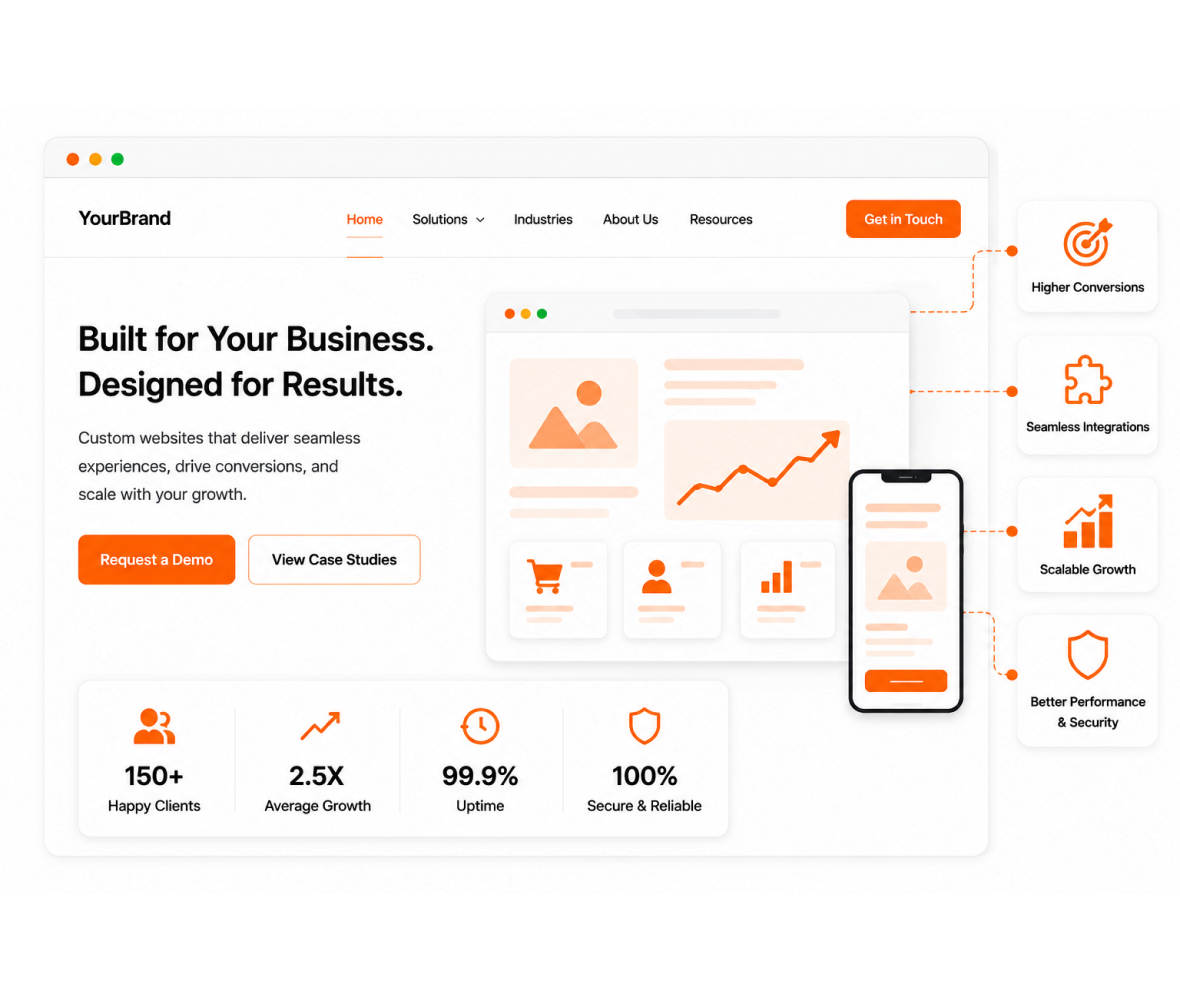
Custom website development is the correct path when your website serves as a primary revenue channel, lead generation tool, or customer-facing platform where performance, usability, and scalability directly affect business outcomes. It is the right choice when template-based solutions cannot accommodate your conversion requirements, integration needs, or content architecture without significant compromise.
When Template-Based Solutions May Be Sufficient
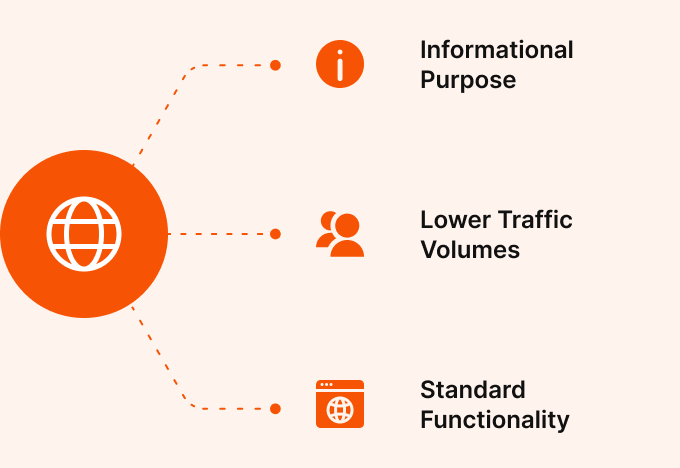
Custom development is not necessary when the website serves a limited informational role, traffic volumes are modest, and existing template platforms meet functional requirements without material trade-offs. If a well-configured template can deliver the user experience and performance your business requires for the next two to three years, that may be the more efficient starting point.
Consulting-Led Website Development Approach
Addressing Performance Issues at the Planning Stage
Most website performance issues originate before development begins - in unclear objectives, undefined user journeys, or misaligned priorities.
Business Requirements and Planning
Before any design or technical work begins, we establish what the website must accomplish from a business perspective, who will use it, and how success will be measured. That clarity shapes the architecture, informs the user experience, and determines what features are essential versus aspirational. This may also include planning for AI-driven elements such as personalization, content recommendations, or automated user interactions where they support conversion goals.
Governance and Delivery Alignment
Throughout delivery, governance processes ensure alignment between technical execution and conversion objectives. Performance benchmarks, usability standards, and conversion goals are validated at each stage rather than deferred to post-launch evaluation.
Addressing Performance Issues at the Planning Stage
Most website performance issues originate before development begins - in unclear objectives, undefined user journeys, or misaligned priorities.
Business Requirements and Planning
Before any design or technical work begins, we establish what the website must accomplish from a business perspective, who will use it, and how success will be measured. That clarity shapes the architecture, informs the user experience, and determines what features are essential versus aspirational. This may also include planning for AI-driven elements such as personalization, content recommendations, or automated user interactions where they support conversion goals.
Governance and Delivery Alignment
Throughout delivery, governance processes ensure alignment between technical execution and conversion objectives. Performance benchmarks, usability standards, and conversion goals are validated at each stage rather than deferred to post-launch evaluation.
How that planning translates into delivery follows a defined sequence - each stage building on the one before it, with review points that keep execution aligned with what the business actually needs.
Structured Website Design and User Experience Process
Each phase is reviewed before the next begins. This keeps scope controlled, surfaces issues early, and ensures the final build reflects the decisions made at the planning stage - not compromises made under delivery pressure.

Discovery & Requirements Mapping
Before any design begins, we establish what the website needs to accomplish, who it is built for, and what a successful outcome looks like. Business objectives, user profiles, and performance benchmarks are defined here. This stage prevents rework later by ensuring the entire team is working from the same foundation.

Information Architecture & User Flow Planning
Content is organised into a logical structure that supports how users navigate and make decisions. Navigation hierarchies, page groupings, and conversion paths are mapped before visual design begins - so layouts are shaped by behaviour, not assumption.

Wireframing
Structural layouts are sketched and reviewed as low-fidelity wireframes. These define where content sits, how key actions are positioned, and how the user moves through the site. Visual design has not started yet - decisions at this stage are purely about clarity and function.

UI Design & Prototyping
Once structure is confirmed, visual design is applied. Interfaces are built to reflect the brand, guide attention, and reduce friction at decision points. Interactive prototypes allow stakeholders to review key flows and surface any usability concerns before development begins.

Development & Integration
The approved design is built out across front-end and back-end. Third-party integrations - analytics, CRM, marketing platforms - are implemented at this stage, with architecture decisions made to support long-term maintainability rather than short-term convenience.

Testing & Quality Assurance
The site is tested across devices, browsers, and load conditions. Functional checks, accessibility reviews, and performance benchmarks are run before launch. Issues identified here are resolved within the same delivery cycle, not deferred to post-launch remediation.

Launch & Post-Launch Support
Deployment follows a structured release process. After launch, we monitor performance, address any emerging issues, and provide the support needed for the team to maintain and develop the site confidently going forward.
The result is a website built on a foundation of deliberate planning, not assumptions.


Engagement Models We Offer
Website development initiatives vary in complexity, urgency, and ongoing maintenance requirements. We structure engagements to reflect that reality.

Dedicated Website Developers
For projects with evolving requirements that cannot be fully defined upfront, dedicated maintenance developers provide the continuity and codebase familiarity that rotating teams cannot. This model is the right fit when legacy systems require ongoing monitoring, proactive issue resolution, and incremental improvement that benefits from sustained team involvement. Developers operate as an extension of your operations team, building context over time that directly improves response quality and decision speed.

Project-Based Development
When scope is clearly defined, timelines are fixed, and the objective is a specific upgrade, security hardening initiative, or performance optimization effort, project-based development delivers predictable outcomes against agreed milestones. This model works when requirements are bounded, the deliverable is specific, and the team does not need ongoing maintenance engagement beyond the project.

Consulting & Advisory Engagement
When the decision between maintaining, upgrading, or replacing a system is unresolved, or when teams need to understand system condition before committing resources, a consulting engagement provides the evaluation framework to make that call with confidence. This model covers risk assessment, system health analysis, and strategic planning - helping organisations avoid committing to a maintenance or upgrade path before the evidence justifies it.

Flexible Engagement Approach
Not every legacy system follows a predictable maintenance trajectory. A targeted upgrade project may reveal deeper structural issues requiring ongoing support, or an initial assessment may lead directly into remediation work. We structure engagements to accommodate that shift without requiring new vendor relationships, knowledge transfer, or re-onboarding - allowing teams to move between delivery models without losing momentum or system context.
Technologies and Platforms We Use
Technology decisions are evaluated against long-term performance, security, integration capacity, and maintainability. We work with proven platforms and frameworks selected for stability, vendor support, and alignment with organisational requirements.
Tools and Technologies We Work With
The tools we use are selected based on what each project actually requires - not what is currently popular. Below is the range of technologies across design, development, and delivery that our team works with regularly.
UI/UX & Prototyping
Figma · Adobe XD · Sketch · Illustrator



Graphics & Motion
Adobe After Effects · Adobe Premiere Pro


Front-End Technologies
HTML · CSS · JavaScript · jQuery · Bootstrap · Tailwind CSS






AI-Assisted Design Tools
Figma AI · Lovable · Antigravity


Tool selection for any given project is discussed during planning, with decisions guided by what the system needs to maintain and extend over time.

Content Management and Platform Selection
Content management systems are selected for governance capability, scalability, and ease of use by non-technical teams. Performance optimisation includes caching strategies, efficient code structures, and infrastructure configurations designed to handle growth in traffic and content volume without degradation.

Security and Compliance
Security measures are implemented throughout the technology stack, including encryption, access controls, and regular updates to protect against emerging vulnerabilities. Compliance with relevant standards - accessibility, data protection, industry-specific regulations - is addressed during planning and validated throughout delivery.

Why Choose NebulaTech for Website Design & Development
The difference between a website that delivers sustained business value and one that requires constant remediation often lies in how the engagement was structured from the outset. The difference is not in development capability alone, but in how decisions are structured before development begins.
Consulting-First Planning


Our consulting-first approach ensures that architectural decisions, performance standards, and usability requirements are defined before development begins. This reduces rework, avoids post-launch crises, and produces websites capable of supporting business growth without periodic rebuilds.
NDA-First Engagement and Client Ownership
Architectures Built for Longevity
Consulting-First Planning
NDA-First Engagement and Client Ownership
Architectures Built for Longevity
Our consulting-first approach ensures that architectural decisions, performance standards, and usability requirements are defined before development begins. This reduces rework, avoids post-launch crises, and produces websites capable of supporting business growth without periodic rebuilds.
We combine strategic planning with execution capacity, delivering websites that function as reliable business assets from the day they launch.
Cost of Website Design & Development
What Determines Website Design and Development Cost
The cost of website design and development depends on project complexity, the depth of custom functionality required, integration scope, and whether the engagement involves a new build, redesign, or ongoing optimisation. A content-focused business website with standard CMS functionality differs significantly in investment from a high-traffic platform with custom integrations, advanced user flows, and enterprise-grade performance requirements.
Key Factors That Influence Total Investment

Content Management Platform Selection
CMS platform choice impacts scalability, customization flexibility, plugin ecosystem, and long-term maintenance costs.

Responsive Design Complexity
Custom layouts, device optimization, and responsive testing requirements increase design and development effort.

Backend Integration Depth
Third-party APIs, databases, CRM systems, and custom integrations add complexity across development and testing phases.

Engagement Structure
Dedicated development teams and milestone-based delivery models affect how investment is distributed over time.

Scope & Technical Requirements
Feature complexity, workflows, and technical requirements directly influence implementation effort and project timelines.

Detailed Cost Estimates
Transparent estimates based on clearly defined scope help organisations evaluate investment against measurable deliverables.
What Our Clients Say

Feedback Summary:
Having worked with NebulaTech for close to 3 years now, Nebulatech IT has a strong team of engineers and we have built and shipped amazing solutions with them.

Abhimanyu C.
EM & Product Manager


Project:
AI-powered size recommendation engine
Our Contribution
Architected a flexible front-end framework to dynamically ingest, normalize, and visualize diverse sizing datasets.
Built multi-category virtual fitting & Product visualization with comparison.
Launched a lightweight front-end integration with existing storefronts with cross browser compatibility & responsive UI.
Tech Stack:




Feedback Summary:
I had a really good experience working with NebulaTech! The team is responsive, helpful, and always quick to get back to us whenever we need assistance. We worked with their Mobile App Development team to build our app, and the whole experience was smooth from the start. They were flexible with our needs and made the development process much easier than we expected.

Ryan C.
CEO


Project:
A Multi-sided Ecommerce App
Our Contribution
Instead of building each application as a separate system, we connected them through a shared backend so that order, inventory, delivery, and marketplace data stay consistent across the platform.
Designed a highly scalable infrastructure capable of handling high-concurrency traffic during peak shopping seasons.
Integrated Stripe Payment Gateway for Secure Transaction Processing and Google Maps APIs for Real-Time Geolocation & Location Tracking.
Tech Stack:







Feedback Summary:
NebulaTech IT has a clear business understanding and can articulate business needs into technical requirements. What truly sets Nebulatech apart is their professionalism, responsiveness, and commitment to quality.

Mayank D.
Director

Project:
A GiftCard Platform
Our Contribution
Consulted the client from the initial idea through detailed business logic, helping define the right technology stack, architecture, and infrastructure before moving into development.
Designed a modern, high-performance platform that is fast, secure, and SEO-friendly.
Engineered a scalable giftcard marketplace platform supporting 500+ brands across 20+ categories, with a robust transaction and payment architecture, real-time discount and pricing logic, and a seamless end-to-end purchase experience.
Tech Stack: