
Architectural Decisions Define Long-Term Product Outcomes
Native Mobile App Development for High-Performance iOS and Android Applications
Most mobile apps don't fail because they lack features. They fail because of decisions made in the first few weeks of development - architecture choices, platform shortcuts, and integrations that work fine at launch but become expensive problems as the product grows. We build native iOS and Android applications for businesses where platform-level performance, hardware integration, and long-term product stability are non-negotiable. Our work combines technical delivery with product thinking - we don't just write code; we help teams make better architectural decisions before implementation begins.
 NDA ProtectedClient-Owned IPEnterprise ArchitectureNDA ProtectedClient-Owned IPEnterprise ArchitectureNDA ProtectedClient-Owned IPEnterprise Architecture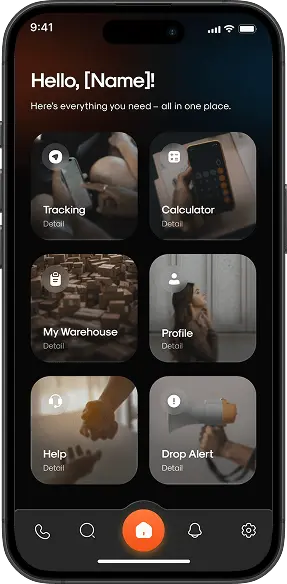


Designed for product managers, founders, and technical decision-makers building high-performance iOS and Android apps for scale, stability, and long-term maintainability.

Common Challenges in Native Mobile App Development
Many organisations do not recognise these risks until performance degradation or scalability limits begin affecting real users.
Early Architectural Decisions Create Long-Term Constraints
Many native mobile applications struggle not because of missing features, but due to early architectural decisions and execution gaps that surface as products grow.
Performance and Coordination Challenges Across Platforms
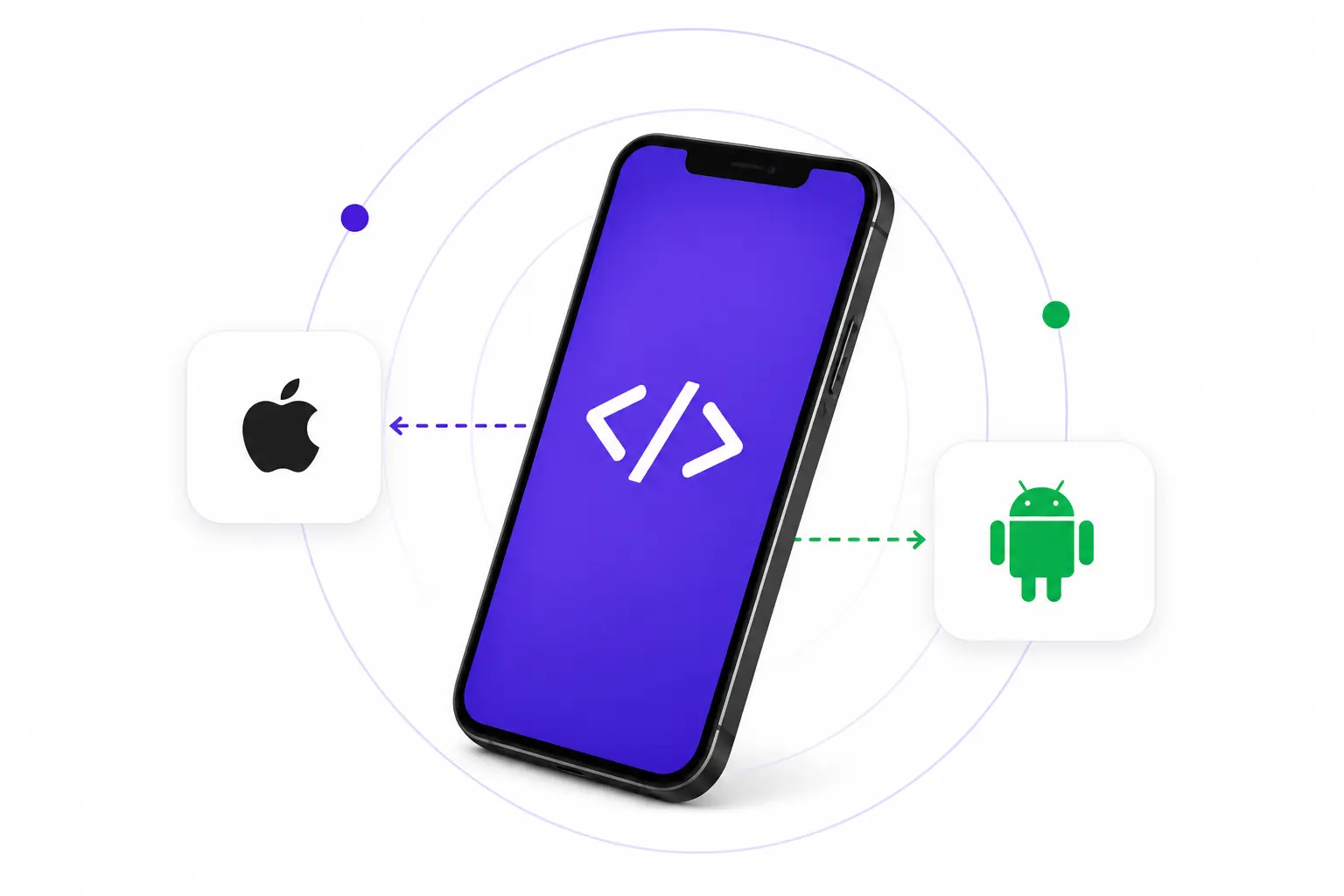
Businesses building native apps often face challenges that directly affect product velocity, user trust, and long-term ROI. Performance bottlenecks can damage app ratings and reduce user retention, particularly when products are not optimised for real-world usage. Maintaining separate iOS and Android codebases increases complexity and operational overhead, especially as teams work to deliver consistent functionality across platforms. Managing two independent platform codebases introduces coordination risk, especially when feature parity and release timing must remain aligned across operating systems.
Scalability, Security, and Long-Term Maintenance Risks
Scalability becomes a constraint when systems are not designed to handle growth in users, data volume, or feature complexity. Security vulnerabilities expose both user data and business risk, creating compliance concerns and eroding customer confidence. Rising maintenance costs often stem from short-term development decisions that fail to account for the full lifecycle of the application.
Business Impact Beyond Engineering Teams
These challenges affect not just technical teams, but also product leaders and business stakeholders responsible for ensuring applications remain stable, secure, and capable of supporting strategic goals over time.
Our Native Mobile App
Development Services
End-to-End Native Mobile App Development Services
We deliver custom Native Mobile App Development services designed to support product stability, performance, and continuous evolution as products and business needs change. These services are structured to support businesses evaluating Native Mobile App Development services as a long-term product investment rather than a short-term build exercise.
Native iOS App Development
Our native iOS app development services focus on building applications that follow Apple ecosystem best practices, ensuring consistent performance across devices and iOS versions. We design interfaces and functionality that align with user expectations while maintaining the flexibility required for future feature expansion.
Native Android App Development
Our native Android app development services address the complexity of device diversity and platform fragmentation. Each custom native mobile app development engagement is optimised to perform reliably across manufacturers, screen sizes, and Android versions, reducing the risk of user experience inconsistencies that can affect retention and engagement.
Platform-Specific UI and UX Implementation
Platform-specific UI and UX implementation ensures that each app fully leverages operating system conventions, device capabilities, and hardware integrations unique to its ecosystem. This approach improves usability and reduces friction, directly supporting adoption and long-term engagement.
Backend and API Integration
Backend and API integrations are designed to support data security and operational continuity as products grow. Reliable connections between mobile apps and server infrastructure help prevent bottlenecks and protect sensitive information throughout the application lifecycle.
Performance Optimisation and Maintenance
Performance optimisation focuses on real-world usage patterns, ensuring smooth responsiveness under increasing load. Ongoing support and maintenance keep applications stable and secure over time, reducing the risk of unexpected failures or degraded user experiences.
Built for Long-Term Product Stability and Growth
Every native mobile app development engagement is engineered to support user growth, feature expansion, and long-term maintainability without requiring complete rebuilds as business priorities evolve.

For organisations that need to extend their in-house capacity, we also support businesses looking to hire React Native developers, hire Android developers, or hire iOS developers as part of dedicated or blended delivery teams aligned with native product goals.

Extending Native Applications to Connected TV Platforms
Many organisations do not recognise these risks until performance degradation or scalability limits begin affecting real users.

Beyond the Smartphone - Native Development for Television Interfaces
Businesses increasingly require applications that operate beyond the smartphone - on television interfaces where user interaction models, display constraints, and platform expectations differ significantly from mobile.

Android TV, Google TV, and Apple TV (tvOS)

Built for the Android ecosystem with flexible UI components and broad device support.

Optimized for discovery, personalization and seamless integration with Google services.

Native tvOS experiences designed for performance, simplicity and Apple’s human interface guidelines.
Each platform introduces distinct UI paradigms, input mechanisms, and performance requirements that demand platform-native implementation rather than adapterd mobile interfaces.


Connected TV as a First-Class Engineering Concern
Connected TV development is treated as a first-class engineering concern, not a reskin of an existing mobile product. Applications built for these environments are designed around the viewing context, remote and game controller navigation patterns, and the content consumption behaviours specific to each ecosystem.

Designed for the living room expeirences

Remote & Game Controller Navigation

Optimized for Big Screens & Performance

Content Consumption Behaviors at the Core

Consistent Native Strategy Across Mobile and Living Room Devices
For businesses looking to expand their product presence across living room devices while maintaining consistency with their mobile platform strategy, this capability sits within the same native development approach applied across iOS and Android.
When to Choose Native Mobile App Development
When Native Development Becomes the Right Choice
Choosing native development is a product decision, not a default. The right answer depends on where performance, platform depth, and long-term maintainability sit on your priority list - and understanding those trade-offs early prevents costly pivots later.
Use Cases Where Native Development Delivers Maximum Value
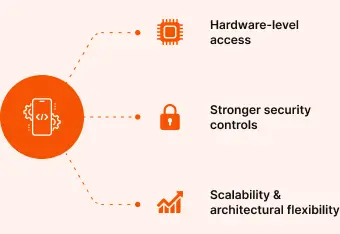
Native development is typically the stronger choice when applications depend on hardware-level access, real-time responsiveness, or deep integration with platform-specific capabilities such as ARKit, Core ML, or Android's CameraX. Products that handle sensitive data or operate in regulated environments also benefit from the tighter security controls that platform-native architectures provide. For products expected to scale significantly in users or feature complexity, native codebases offer greater architectural flexibility when managing performance under load, adapting to operating system updates, or extending functionality without waiting for third-party framework compatibility.


When Cross-Platform May Be a Practical Alternative
On the other hand, if your product requires rapid market testing across both platforms with a limited budget, or if the application is primarily content-driven with minimal platform-specific logic, cross-platform approaches may offer a more practical starting point. The trade-off is usually performance headroom, long-term maintainability, and platform depth.

Evaluating Trade-Offs Before Making a Decision
Understanding these trade-offs early prevents costly pivots later. We help teams evaluate their product requirements, user expectations, and business timelines to determine whether native, cross-platform, or a phased approach delivers the best outcome.
Consulting-Led Native Mobile App Development Approach
Product Thinking Before Development Execution
Successful native applications are driven by clear product thinking, not just development tasks. Our consulting-led approach focuses on aligning technical decisions with business objectives before implementation begins.
Many vendors execute features; few examine whether those features should exist in the first place.
Aligning Technical Decisions with Business Objectives
We work to understand product goals, user expectations, and business constraints early in the engagement. This clarity helps teams avoid building features that do not support core objectives or that create maintenance burdens later. Platform-specific architecture decisions are made with full visibility into how applications will need to evolve as user bases grow and feature requirements change.
Designing for Scalability and Future Adaptability
Design decisions prioritise long-term product stability and adaptability. Applications built without consideration for growth often require expensive refactoring or complete rebuilds as usage patterns shift or new capabilities become necessary. By addressing these concerns during planning, we reduce the likelihood of technical debt accumulating over time. This may also include evaluating AI-driven features such as personalization, predictive behavior, or intelligent automation where they align with product goals.
Ensuring Stability Through Testing and Validation
Testing and validation ensure release readiness and help identify issues that could affect user experience or operational stability. This reduces the risk of launching applications that perform inconsistently or require immediate post-launch fixes.
Reducing Long-Term Product Risk Through Structured Decisions
This approach reduces rework, lowers long-term maintenance costs, and ensures that applications remain capable of supporting business needs as products mature. Decision-makers gain confidence that technical execution supports strategic priorities without introducing future constraints.
Product Thinking Before Development Execution
Successful native applications are driven by clear product thinking, not just development tasks. Our consulting-led approach focuses on aligning technical decisions with business objectives before implementation begins.
Many vendors execute features; few examine whether those features should exist in the first place.
Aligning Technical Decisions with Business Objectives
We work to understand product goals, user expectations, and business constraints early in the engagement. This clarity helps teams avoid building features that do not support core objectives or that create maintenance burdens later. Platform-specific architecture decisions are made with full visibility into how applications will need to evolve as user bases grow and feature requirements change.
Designing for Scalability and Future Adaptability
Design decisions prioritise long-term product stability and adaptability. Applications built without consideration for growth often require expensive refactoring or complete rebuilds as usage patterns shift or new capabilities become necessary. By addressing these concerns during planning, we reduce the likelihood of technical debt accumulating over time. This may also include evaluating AI-driven features such as personalization, predictive behavior, or intelligent automation where they align with product goals.
Ensuring Stability Through Testing and Validation
Testing and validation ensure release readiness and help identify issues that could affect user experience or operational stability. This reduces the risk of launching applications that perform inconsistently or require immediate post-launch fixes.
Reducing Long-Term Product Risk Through Structured Decisions
This approach reduces rework, lowers long-term maintenance costs, and ensures that applications remain capable of supporting business needs as products mature. Decision-makers gain confidence that technical execution supports strategic priorities without introducing future constraints.
Engagement Models We Offer
We offer flexible engagement models designed to align with how product teams plan, deliver, and scale native mobile development.

Dedicated Native App Developers
This model supports products requiring continuous native application development, iteration, and optimisation. Teams gain consistent delivery capacity for ongoing feature releases, performance improvements, and platform updates as mobile ecosystems evolve. Dedicated native app developers integrate with your internal workflows, providing sustained velocity for applications with dynamic roadmaps or growing user bases that demand regular enhancements.

Project-Based Development
This model is suited for clearly defined applications with fixed scope and delivery timelines. It provides predictable project boundaries for organisations launching new products, adding specific capabilities to existing applications, or modernising legacy mobile solutions. Defined milestones and deliverables support effective planning and budgeting, making this approach practical for teams that need controlled execution without long-term resource commitments.

Consulting & Advisory Engagement
For organisations that need strategic clarity before committing to full-scale development, this model provides architecture reviews, platform selection guidance, and product feasibility assessments. It is particularly relevant when teams are evaluating whether to build native, cross-platform, or hybrid solutions, or when existing applications require an independent technical audit before further investment. This engagement focuses on decision support rather than delivery, helping stakeholders reduce risk before execution begins.

Flexible Engagement Approach
In many cases, product requirements evolve during development. Our flexible engagement approach allows businesses to adapt scope, priorities, and execution models as product needs change. Organisations can combine dedicated development with project-based initiatives, ensuring alignment with shifting product goals without being constrained by rigid engagement structures. This approach is particularly useful when requirements are not fully defined at the start, when product direction evolves during execution, or when teams require flexibility without compromising delivery consistency. Rather than enforcing a fixed model, we align engagement structure with how the product actually evolves.
Technologies We Work With
Swift
SwiftUI

UIKit

Xcode

Objective-C

Kotlin
Java

Jetpack Compose

Android Studio

Android Jetpack
What Our Clients Say

Feedback Summary:
Having worked with NebulaTech for close to 3 years now, Nebulatech IT has a strong team of engineers and we have built and shipped amazing solutions with them.

Abhimanyu C.
EM & Product Manager


Project:
AI-powered size recommendation engine
Our Contribution
Architected a flexible front-end framework to dynamically ingest, normalize, and visualize diverse sizing datasets.
Built multi-category virtual fitting & Product visualization with comparison.
Launched a lightweight front-end integration with existing storefronts with cross browser compatibility & responsive UI.
Tech Stack:




Feedback Summary:
I had a really good experience working with NebulaTech! The team is responsive, helpful, and always quick to get back to us whenever we need assistance. We worked with their Mobile App Development team to build our app, and the whole experience was smooth from the start. They were flexible with our needs and made the development process much easier than we expected.

Ryan C.
CEO


Project:
A Multi-sided Ecommerce App
Our Contribution
Instead of building each application as a separate system, we connected them through a shared backend so that order, inventory, delivery, and marketplace data stay consistent across the platform.
Designed a highly scalable infrastructure capable of handling high-concurrency traffic during peak shopping seasons.
Integrated Stripe Payment Gateway for Secure Transaction Processing and Google Maps APIs for Real-Time Geolocation & Location Tracking.
Tech Stack:







Feedback Summary:
NebulaTech IT has a clear business understanding and can articulate business needs into technical requirements. What truly sets Nebulatech apart is their professionalism, responsiveness, and commitment to quality.

Mayank D.
Director

Project:
A GiftCard Platform
Our Contribution
Consulted the client from the initial idea through detailed business logic, helping define the right technology stack, architecture, and infrastructure before moving into development.
Designed a modern, high-performance platform that is fast, secure, and SEO-friendly.
Engineered a scalable giftcard marketplace platform supporting 500+ brands across 20+ categories, with a robust transaction and payment architecture, real-time discount and pricing logic, and a seamless end-to-end purchase experience.
Tech Stack:

Cost of Native Mobile App Development
What Determines Native Mobile App Development Cost
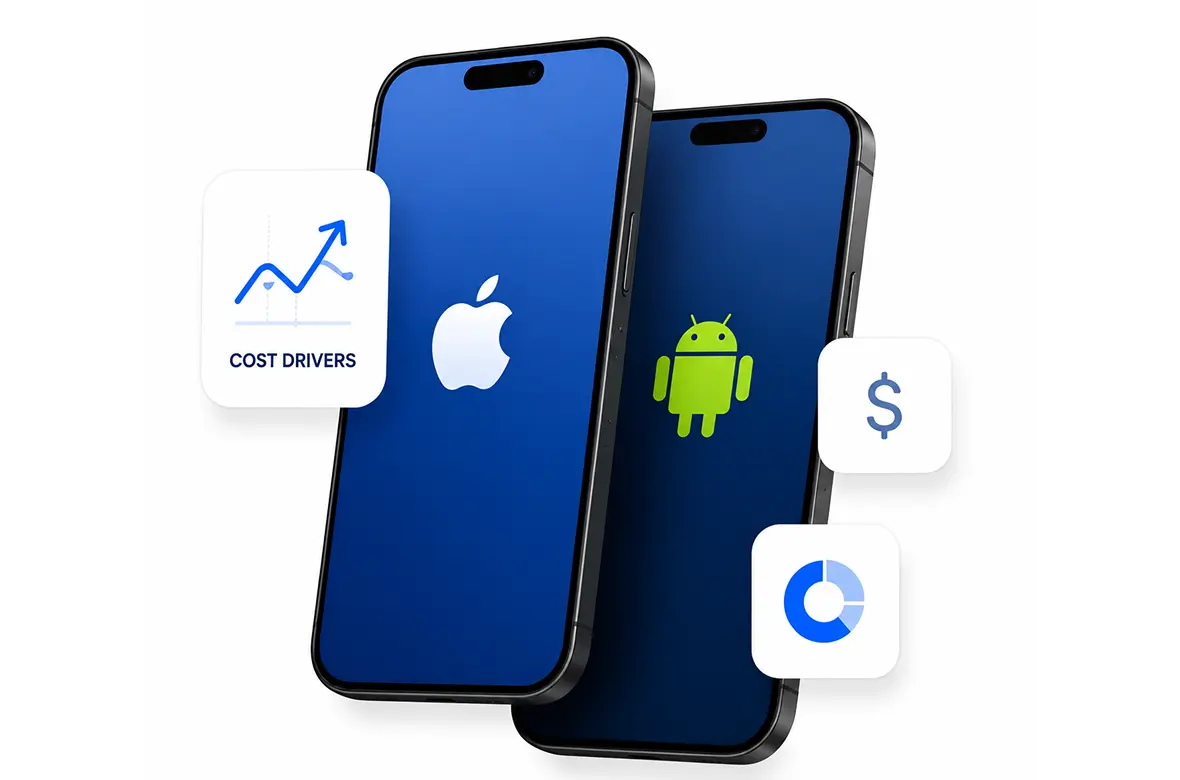
The cost of Native Mobile App Development depends on several factors that vary significantly across projects. Rather than publishing generic price ranges that rarely reflect actual project realities, we find it more useful to explain what drives cost so decision-makers can plan with greater accuracy.

Platform Scope and Development Complexity
Platform scope is typically the first consideration. Building for a single platform - iOS or Android - requires less investment than developing and maintaining parallel applications across both. However, the incremental cost of the second platform is often lower than the first, particularly when architecture, backend infrastructure, and design systems are planned for reuse from the outset.

Feature Complexity and Integration Requirements
Application complexity plays a significant role. Products with real-time features, hardware integrations, offline capability, or complex data handling require deeper engineering effort than standard content or utility applications. Third-party integrations, compliance requirements, and enterprise-grade security measures each add layers of planning and implementation that affect overall investment.

How Engagement Models Influence Overall Investment
Engagement structure also influences cost. Dedicated teams offer cost predictability for ongoing development, while project-based models provide clearer budgetary boundaries for defined deliverables. Consulting engagements tend to be lighter in cost but deliver strategic value that prevents more expensive mistakes during implementation. We provide detailed cost estimates based on actual project scope, technical requirements, and delivery timelines rather than standardised pricing tiers. This ensures organisations understand exactly what they are investing in and why.
For businesses evaluating Native Mobile App Development, a structured consultation helps clarify scope, technical direction, and cost expectations before development begins.
Why Choose NebulaTech for Native Mobile App Development
Consulting-First Execution Model


Our consulting-first, execution-strong delivery model reduces development risk by aligning technical decisions with business objectives before implementation begins. This approach helps organisations avoid costly rework and technical debt that often result from feature-driven development without strategic clarity.
Experience Across Product Lifecycles
Secure Development and IP Protection
Built for Long-Term Architectural Stability
Consulting-First Execution Model
Experience Across Product Lifecycles
Secure Development and IP Protection
Built for Long-Term Architectural Stability
Our consulting-first, execution-strong delivery model reduces development risk by aligning technical decisions with business objectives before implementation begins. This approach helps organisations avoid costly rework and technical debt that often result from feature-driven development without strategic clarity.
We focus on building platform-native apps that continue to deliver value as products evolve, supporting teams in managing technical execution as part of a broader product strategy rather than an isolated development function.