
Hybrid Mobile App Development Services
Launch Faster With Seamless Cross-Platform Experiences.
Native development may be more appropriate for applications that depend heavily on platform-specific APIs, advanced graphics, specialized hardware, or highly customized platform behavior. Native technologies can provide more direct access to platform capabilities and greater control over platform-specific implementation. The appropriate approach depends on the application's technical and business requirements rather than development speed or cost alone.
 NDA ProtectedClient-Owned IPEnterprise ArchitectureNDA ProtectedClient-Owned IPEnterprise ArchitectureNDA ProtectedClient-Owned IPEnterprise Architecture


Built for product teams and decision-makers who want faster cross-platform app delivery without compromising scalability or user experience.

Challenges Businesses Face with Hybrid Mobile App Development
Why Hybrid Mobile App Development Often Fails Without Discipline
Hybrid development has a reputation problem - largely because it is often chosen for the wrong reasons and implemented without the architectural discipline it requires.
Framework Selection Driven by Convenience
The most common failure mode is framework selection driven by speed and budget rather than product fit. A framework that works well for a content-heavy application can struggle with real-time interactions or hardware-intensive features. By the time that mismatch becomes obvious, a significant amount of the codebase is built around it.
Inconsistent Cross-Platform Experience
Inconsistent UI and UX across platforms is another persistent issue. Hybrid applications that look and feel like they were designed for one platform and ported to another erode user trust quickly. The problem usually is not the framework itself - it is that platform-specific interaction patterns were not considered during design.
Shared Codebase Degradation
Poorly structured shared codebases become maintenance burdens as products grow. What starts as clean, efficient shared logic accumulates platform-specific workarounds and conditional branches until the codebase is harder to work with than two separate native codebases would have been.
Framework Lock-In
Framework lock-in is the risk that does not show up until it matters most - usually when the business needs to pivot, scale rapidly, or integrate with platform capabilities the chosen framework does not support well. These challenges directly affect product credibility, development velocity, and long-term return on investment. Architectural discipline at the outset is not optional - it determines whether hybrid remains an advantage or becomes a constraint.
Our Hybrid Mobile App Development Services
End-to-End Hybrid Mobile App Development Capabilities
We cover the full lifecycle of hybrid application development - from architectural evaluation and framework selection through maintenance and performance optimisation. Each capability is structured around business durability rather than rapid delivery alone.
Cross-Platform Mobile App Development
We build cross-platform mobile applications using proven hybrid frameworks selected based on product requirements and lifecycle considerations. Architectures are designed to support rapid delivery while remaining maintainable as feature complexity increases and user expectations shift.
Backend and API Integration
Secure backend and API integrations connect hybrid applications to existing systems and data sources. This extends functionality beyond front-end presentation and ensures that application logic, data flows, and third-party dependencies operate reliably under production conditions.
Testing and Quality Assurance
Cross-device and cross-platform testing identifies performance gaps, usability issues, and rendering inconsistencies before deployment. Testing is planned alongside feature delivery to reduce post-launch friction and avoid costly rework cycles.
Ongoing Support and Performance Optimisation
Ongoing support covers application health monitoring, proactive technical debt management, and feature additions that do not destabilize existing functionality. Performance tuning addresses real usage patterns rather than synthetic benchmarks, keeping applications responsive as adoption grows.
App Migration & Modernization
Modernize existing applications by migrating them to flexible hybrid frameworks aligned with current business requirements. Our App Migration & Modernization Services cover technical assessment, architecture planning, code migration, testing, and deployment, with a focus on improving performance, scalability, and long-term maintainability.

For teams requiring dedicated cross-platform development capacity, we also offer the option to hire React Native developers who work as an extension of your product team.
When to Choose Hybrid Mobile App Development
When Hybrid Mobile App Development Becomes the Right Approach
Hybrid is the correct path when the product needs to reach both iOS and Android users within a shared timeline and budget, and when the application does not depend heavily on hardware-level access or graphics-intensive processing. It works well for business applications, SaaS platforms, content-driven products, and internal tools where cross-platform consistency matters more than platform-specific optimisation.
When Native Development Is the Better Alternative
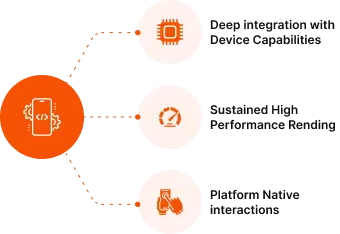
Hybrid is not the right choice when the product requires deep integration with device-specific capabilities, sustained high-performance rendering, or platform-native interactions that cannot be abstracted effectively. In those cases, native development provides the control and performance that hybrid frameworks cannot match. The decision should be driven by product requirements and anticipated scale - not by development speed or cost assumptions alone.
Consulting-Led Hybrid Mobile App Development Approach
Evaluating Product Fit Before Framework Selection
The first question we ask is not which framework to use - it is whether hybrid is appropriate for the product at all. That distinction matters more than most teams expect.
Product Fit Evaluation
We evaluate the product's functionality, platform dependencies, performance requirements, integrations, and expected growth before recommending a framework. The assessment focuses on product fit rather than framework popularity. Where AI or other specialized functionality is required, we also consider how those requirements affect architecture, integrations, performance, and maintenance.
Codebase Architecture and Technical Debt Management
Shared codebases are designed from the outset to support feature expansion without requiring costly refactoring. We identify performance bottlenecks early and design systems that minimize technical debt, reducing the likelihood of delays later in development.
Testing and Deployment Readiness
Testing and deployment preparation are planned alongside feature development. Functional, cross-device, integration, and release testing help identify issues before production deployment and provide a clearer path from development to release.
Evaluating Product Fit Before Framework Selection
The first question we ask is not which framework to use - it is whether hybrid is appropriate for the product at all. That distinction matters more than most teams expect.
Product Fit Evaluation
We evaluate the product's functionality, platform dependencies, performance requirements, integrations, and expected growth before recommending a framework. The assessment focuses on product fit rather than framework popularity. Where AI or other specialized functionality is required, we also consider how those requirements affect architecture, integrations, performance, and maintenance.
Codebase Architecture and Technical Debt Management
Shared codebases are designed from the outset to support feature expansion without requiring costly refactoring. We identify performance bottlenecks early and design systems that minimize technical debt, reducing the likelihood of delays later in development.
Testing and Deployment Readiness
Testing and deployment preparation are planned alongside feature development. Functional, cross-device, integration, and release testing help identify issues before production deployment and provide a clearer path from development to release.
By evaluating technical trade-offs early, we help product teams make clearer framework and architecture decisions while keeping maintainability and platform requirements in view.
Engagement Models We Offer
Hybrid app projects vary in scope, timelines, and technical requirements. We structure our engagement models to provide the right level of development support as your product evolves.

Dedicated Hybrid App Developers
For ongoing product development and evolving requirements, dedicated developers provide continuity and deeper product familiarity. They work as an extension of your team to support consistent delivery over time.
- Ongoing feature development
- Dedicated development resources
- Long-term product support

Project-Based Hybrid App Development
For clearly defined requirements and fixed objectives, project-based development provides a structured path from planning to launch. This model works well when scope, timelines, and deliverables are established upfront.
- Defined project scope
- Structured development process
- Clear delivery milestones

Hybrid App Consulting & Advisory
When the right technical direction is unclear, consulting helps establish clarity before development begins. We help evaluate requirements, frameworks, and technical considerations before resources are committed.
- Framework and technology assessment
- Architecture and roadmap guidance
- Technical risk identification

Flexible Hybrid App Engagement
As product requirements change, your development needs may also evolve. Our flexible model lets you adjust the level of support without losing the context built during the project.
- Flexible resource allocation
- Scalable development support
- Easy transition between models
Technologies We Work With
React Native

Flutter

Ionic

Capacitor
What Our Clients Say

Feedback Summary:
Having worked with NebulaTech for close to 3 years now, Nebulatech IT has a strong team of engineers and we have built and shipped amazing solutions with them.

Abhimanyu C.
EM & Product Manager


Project:
AI-powered size recommendation engine
Our Contribution
Architected a flexible front-end framework to dynamically ingest, normalize, and visualize diverse sizing datasets.
Built multi-category virtual fitting & Product visualization with comparison.
Launched a lightweight front-end integration with existing storefronts with cross browser compatibility & responsive UI.
Tech Stack:




Feedback Summary:
I had a really good experience working with NebulaTech! The team is responsive, helpful, and always quick to get back to us whenever we need assistance. We worked with their Mobile App Development team to build our app, and the whole experience was smooth from the start. They were flexible with our needs and made the development process much easier than we expected.

Ryan C.
CEO


Project:
A Multi-sided Ecommerce App
Our Contribution
Instead of building each application as a separate system, we connected them through a shared backend so that order, inventory, delivery, and marketplace data stay consistent across the platform.
Designed a highly scalable infrastructure capable of handling high-concurrency traffic during peak shopping seasons.
Integrated Stripe Payment Gateway for Secure Transaction Processing and Google Maps APIs for Real-Time Geolocation & Location Tracking.
Tech Stack:







Feedback Summary:
NebulaTech IT has a clear business understanding and can articulate business needs into technical requirements. What truly sets Nebulatech apart is their professionalism, responsiveness, and commitment to quality.

Mayank D.
Director

Project:
A GiftCard Platform
Our Contribution
Consulted the client from the initial idea through detailed business logic, helping define the right technology stack, architecture, and infrastructure before moving into development.
Designed a modern, high-performance platform that is fast, secure, and SEO-friendly.
Engineered a scalable giftcard marketplace platform supporting 500+ brands across 20+ categories, with a robust transaction and payment architecture, real-time discount and pricing logic, and a seamless end-to-end purchase experience.
Tech Stack:

Cost of Hybrid Mobile App Development
What Determines Hybrid Mobile App Development Cost
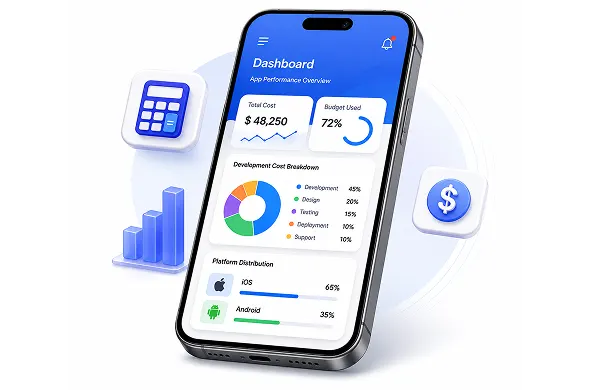
The cost of Hybrid Mobile App Development depends on application complexity, the number of platforms targeted, backend integration requirements, and the level of architectural planning involved. A product with straightforward CRUD operations and standard API connections will require a different investment than one involving real-time data synchronisation, offline-first architecture, or enterprise-grade security protocols.
Key Factors That Influence Total Investment

Framework Selection
Different cross-platform technologies carry different performance profiles, community maturity, and long-term maintenance implications.

Performance Profile
Technology choices affect application performance, scalability potential, and the ability to support future growth efficiently.

Community Maturity
Established ecosystems provide stronger community support, faster issue resolution, and greater long-term sustainability.

Long-Term Maintenance
Compatibility updates, ecosystem stability, and ongoing maintenance requirements influence total ownership cost.

Engagement Structure
Dedicated teams supporting continuous iteration carry a different cost profile than fixed-scope project delivery.

Transparent Costing
Clear estimates tied to defined scope help organisations understand cost drivers and trade-offs before commitments are made.

Why Choose NebulaTech for Hybrid Mobile App Development
A Strategic Approach to Hybrid Application Development


Most hybrid engagements begin with execution. Ours begin with evaluation. We prioritise determining whether hybrid is the correct strategic choice before development starts, because early architectural decisions determine long-term product viability.
Balancing Cross-Platform Efficiency with Long-Term Maintainability
Secure Development and Complete Intellectual Property Ownership
Accountability for Long-Term Performance and System Evolution
A Strategic Approach to Hybrid Application Development
Balancing Cross-Platform Efficiency with Long-Term Maintainability
Secure Development and Complete Intellectual Property Ownership
Accountability for Long-Term Performance and System Evolution
Most hybrid engagements begin with execution. Ours begin with evaluation. We prioritise determining whether hybrid is the correct strategic choice before development starts, because early architectural decisions determine long-term product viability.