How We Built Nivora, a Multi-Sided E-Commerce Platform
See how we designed and developed Nivora to connect commerce, merchant operations, delivery coordination, inventory, and platform administration.
Overview
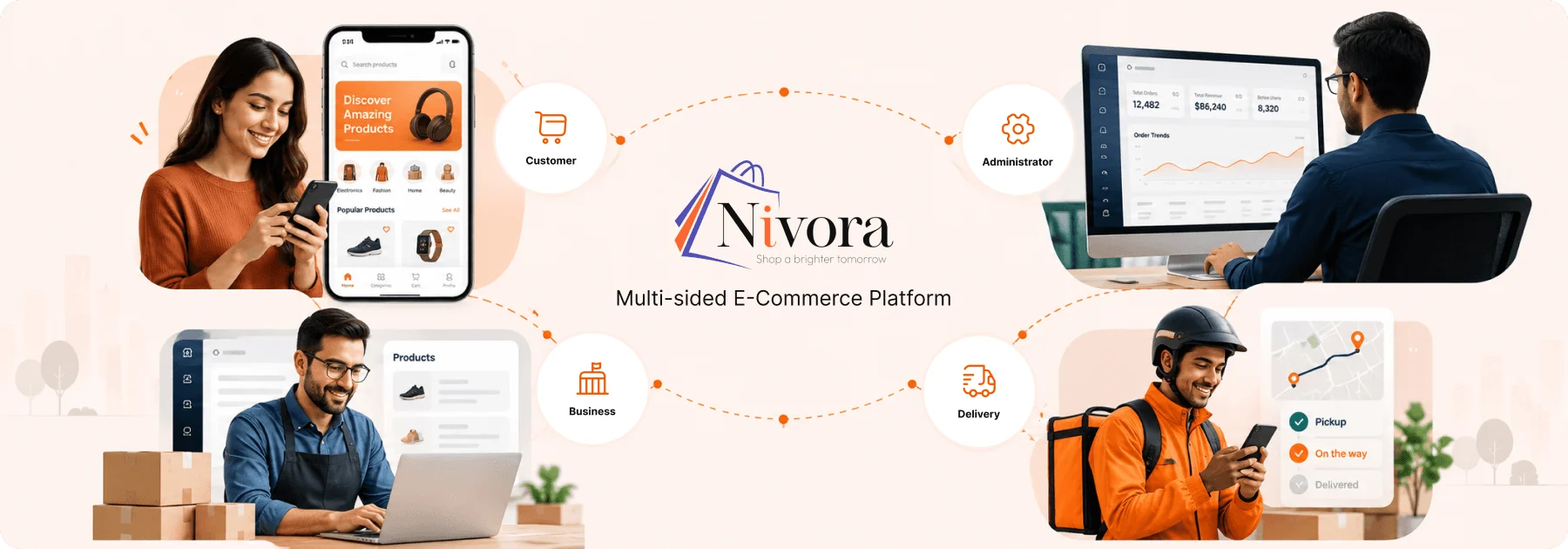
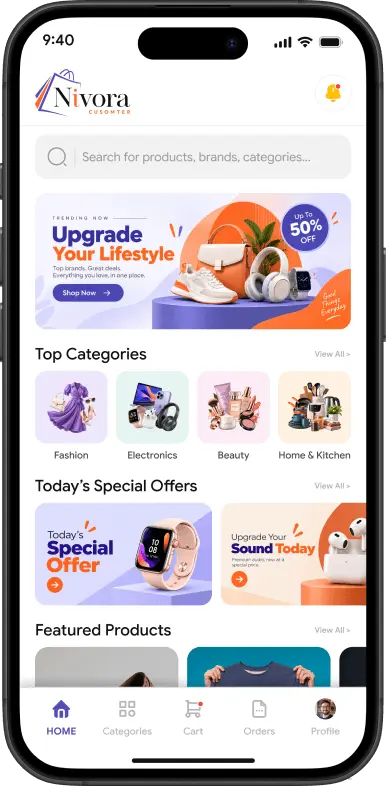
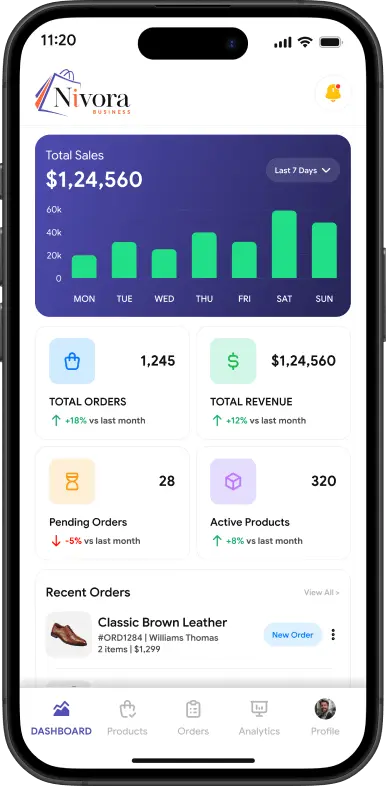
Nivora was built to bring different aspects of e-commerce into one connected system. It gives customers a simple way to discover products, compare offers, and place orders, while also enabling secure payments and real-time delivery tracking. At the same time, businesses can manage their products, inventory, orders, returns, revenue, and performance from a dedicated application.
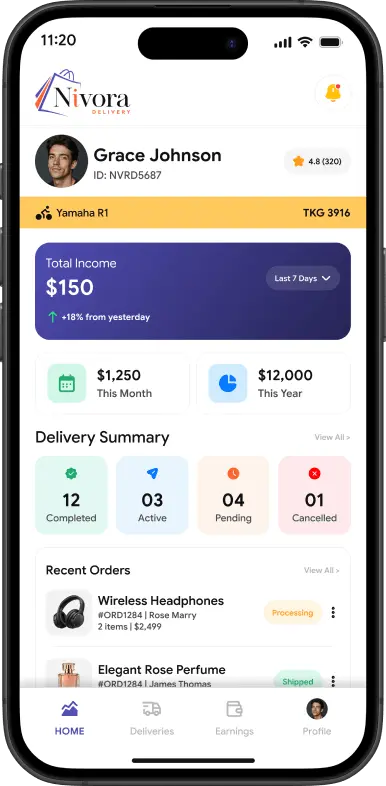
The platform also includes a delivery application for managing assignments, pickups, delivery updates, and location sharing, and a web-based admin panel.
Customer
A growing e-commerce business looking to build a connected marketplace that could serve customers, merchants, delivery partners, and administrators through dedicated applications. The goal was to bring shopping, business operations, order fulfillment, delivery, and platform management into one system.

Challenges

Disconnected e-commerce operations: Managing shopping, merchant activities, fulfillment, delivery, and administration across different parts of the business created a need for one connected operating model.
Inventory and order dependency: Businesses needed their stock information to reflect customer purchases, active orders, returns, and replacements. Managing these areas separately made product availability difficult to track accurately.
Challenges in last-mile coordination: After order preparation, businesses, delivery partners, and customers needed to remain connected throughout the delivery process. The platform needed a reliable way to coordinate assignments, pickups, status updates, and delivery progress.
Lack of centralized marketplace control: Platform administrators needed a central system to manage businesses, products, categories, and marketplace information instead of handling these areas across disconnected processes.
Solution
Our team developed Nivora as a multi-sided e-commerce platform with dedicated applications for customers, businesses, and delivery partners, along with a web-based admin panel. Instead of building each application as a separate system, we connected them through a shared backend so that order, inventory, delivery, and marketplace data stay consistent across the platform.
The solution connects the complete order journey, from product discovery and payment to business fulfillment and last-mile delivery. Role-based access gives each user group the tools and information relevant to their responsibilities. The centralized business logic keeps workflows connected as an order moves from one stage to another.
Major Features
Product Discovery & Search
Customers can browse products, search by relevant criteria, filter results, and compare available offers before making a purchase.
Cart & Checkout
Customers can add products to their cart, apply available promotions, and complete purchases through the checkout flow.
Product & Catalog Management
Businesses can manage products, categories, images, pricing, offers, and stock availability from their dedicated application.
Order Management
Businesses can receive, confirm, prepare, and update orders as they move through the fulfillment process.
Inventory Management
Order activity is connected with inventory records to give businesses visibility into available, ordered, returned, and replacement stock.
Delivery Assignment & Management
The platform assigns suitable delivery partners based on factors such as availability and location, while providing tools to manage pickups and delivery status.
Real-Time Delivery Tracking
Delivery partners can share their location and status, giving customers and businesses visibility into the delivery journey.
Returns & Replacements
Businesses can manage returned and replacement products as part of their existing order and inventory workflows.
Technology Stack Behind Nivora

Tools & Technology

Architecture & Security
Business Outcome
Nivora brought the key stages of the e-commerce journey into one connected platform. So each stakeholder has access to the workflows and information needed to manage their part of the order lifecycle. The shared system created a consistent flow between customers, businesses, delivery partners, and administrators.

End-to-End Shopping Experience
Customers can discover products, compare offers, make purchases, and track their orders through the complete delivery journey.

Marketplace Management
Businesses can manage products, pricing, inventory, orders, returns, revenue, and performance from a dedicated application.

Real-Time Tracking
Delivery partners can receive assignments, manage pickups, update delivery status, and share location information while orders are in transit.

Centralized Administration
Administrators can manage businesses, products, categories, marketplace information, and other platform-level data from a central web panel.

Integrated Order Lifecycle
The connected order lifecycle keeps payment, fulfillment, inventory, delivery assignment, tracking, and order completion linked across the different applications.
Our Philosophy, Proven in Practice
Consulting Before Coding
The project involved multiple applications and stakeholder groups. Instead of beginning with individual screens or features, we looked at the complete order journey and identified the business transaction connecting everyone: the order. That decision became the foundation for the shared backend and centralized business logic.
Business Outcomes Matter
The objective was not simply to deliver customer, merchant, delivery, and admin applications. The objective was to connect the workflows between them so the business could manage the order journey as one system.

We don't believe in coding faster before understanding the problem better.